


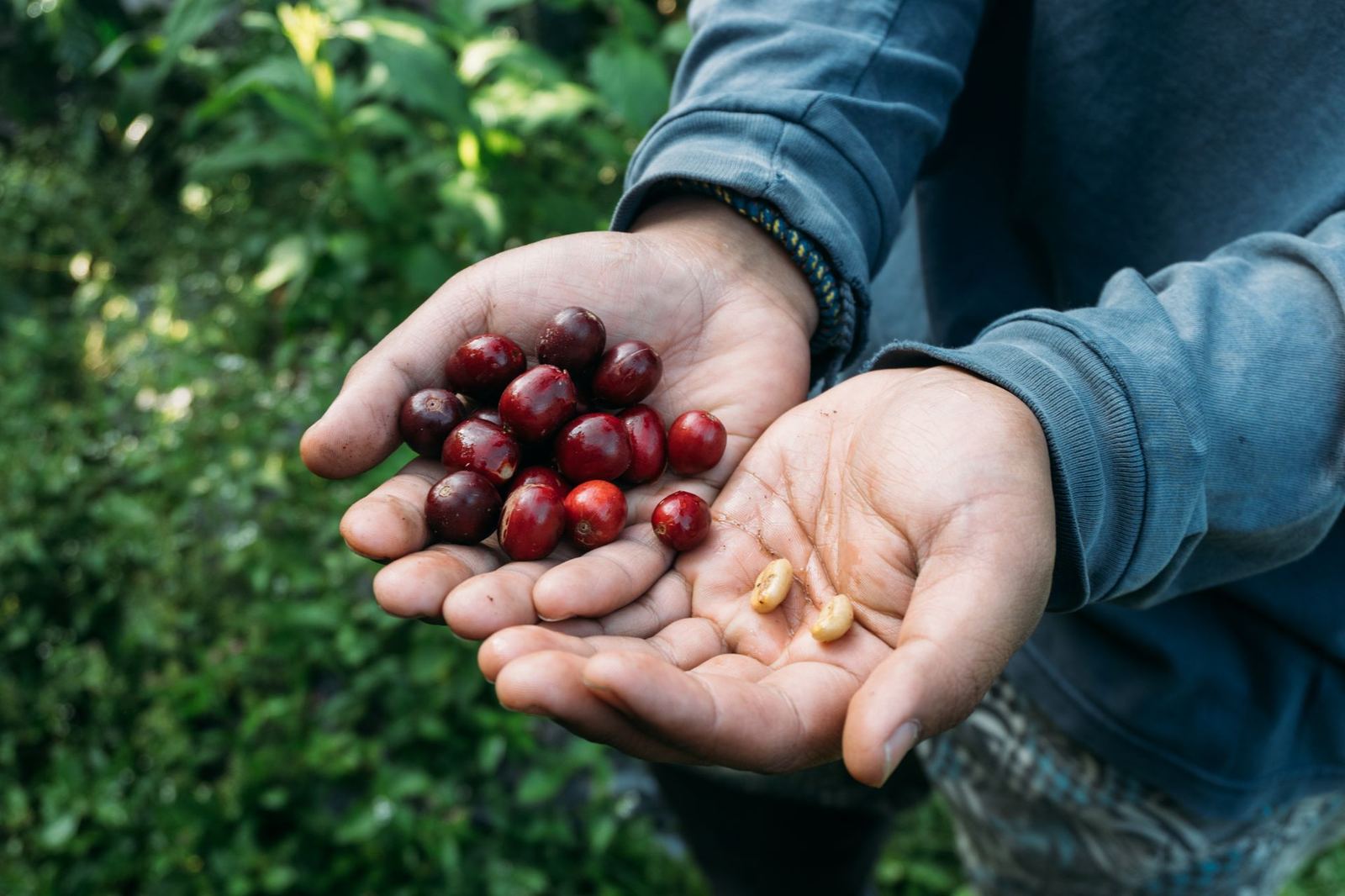
Annual contracts, advance payment and an open price report: the three commitments of direct trade.
The phrase “direct trade” is widely used in the industry, yet its definition is not the same for everyone. At Közel Kahve we reduce the concept to three concrete commitments: an annual contract with the farmer, open prices and continuity of the relationship.
Shortening the middleman chain
In traditional green coffee trade the farmer sells coffee to a cooperative or a processing station; then come the exporter, the importer and finally the roaster. In this chain the share of the price reaching the farmer is often small. We shorten the links that can be shortened, and make the exporter and the cooperative part of a direct contract.
How is the price set?
On top of the exchange reference price we add a quality premium and a farmer premium. On average the price we paid in the 2025/26 season stayed 35% above the reference. For special lots above 86 points an additional premium is paid. All prices appear in the report we publish every February.
Annual contracts and advance payment
Before harvest we agree in writing on volume and price. 30% of the contract value goes to the farmer as an advance before harvest, so no credit is needed for labour and fertiliser. This is vital for small farms.
Visits and feedback
- Our green coffee buyer spends three months of the year in origin countries.
- We send roast results and cupping notes back to farmers; the farmer learns how their coffee shows up in a cup.
- Every year we host one farmer in Istanbul.
Limits and honesty
Direct trade does not solve every problem. Weather, diseases (coffee rust) and currency swings still strain the farmer. The contract has clauses on sharing these risks: even in a bad harvest year we guarantee a minimum purchase.
What can you do?
Look at the farm name on the bag, look up the batch number on our site and read our annual report. Asking whether there is documentation behind a bold claim is the most valuable contribution a consumer can make to the industry.
An example
We have worked with the Kochere station in Ethiopia since 2023. In the first year we bought 4 tonnes; today we buy 11 tonnes. With the premium it received, the station renewed its wash-water treatment plant and brought 38 new producers into the system. Measuring such an effect is as important as the figures in the price table.
In the report to be published this year, the price paid, premium, volume purchased and social investment items for each farm will appear separately.
In short, direct trade is less a label than a way of working: sustaining the relationship for years, sharing risk and being able to show the numbers.